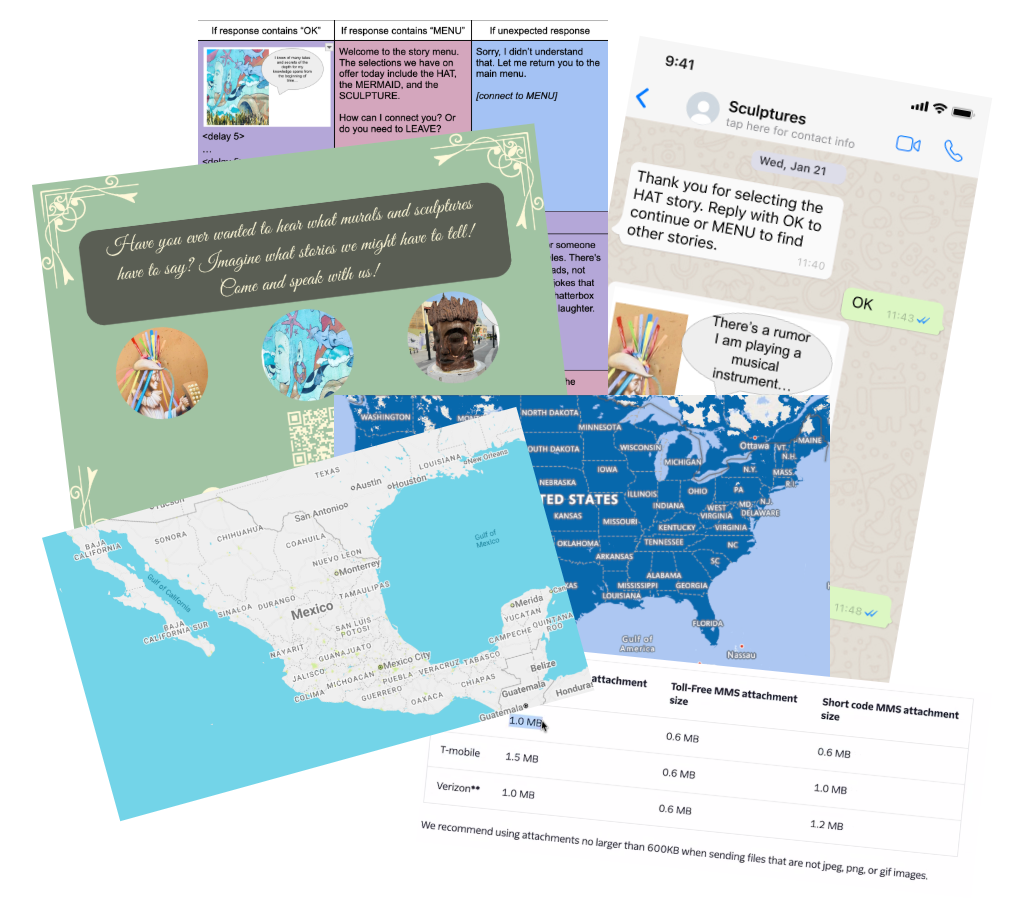
Borders are a force for creativity. Unexpected insights come from the edges, including for low-tech approaches with mobile media and our Hive Mechanic authoring tools. In this post, we share some breakthroughs in what we call “clever-tech.” (Clever is our nod to the resourceful shortcuts and loopholes that can be used to get around more expensive paths to technology, with hints of subversion, folk wisdom and bottom-up empowerment; see also the bricoleur.)
Our work was tied especially to Querétaro, Mexico, where the widespread use of WhatsApp provides a locally-proven workaround for avoiding pricey data plans. Results extend to design values as well.
Findings and major approaches:
- WhatsApp Workarounds — as unexpected messaging infrastructure
- Localization with a Colloquial Quality — avoiding literalism
- Demos with Local Culture – avoiding tourism in early phase design
- Refine Scripts not Design Docs – how to scaffold co-design with clients
Clever-Tech Approach #1: Unexpected Communication Technology (WhatsApp vs MMS)
The Challenge: Traditional text messaging runs through carrier infrastructure that can be inconsistent, especially across remote regions, devices, and prepaid plans (which are still commonly used in Mexico). This inconsistent infrastructure can cause messages to be delayed, fail silently, or cause users to incur unexpected carrier charges.
The coverage map on the left is for Telcel, one of the largest carriers in Mexico. As a point of comparison with the USA, on the right is a coverage map for Verizon Wireless, one of the largest carriers. Coverage is concentrated in population centers and dissipates in rural and remote areas, similar to how coverage is distributed in the United States of America.
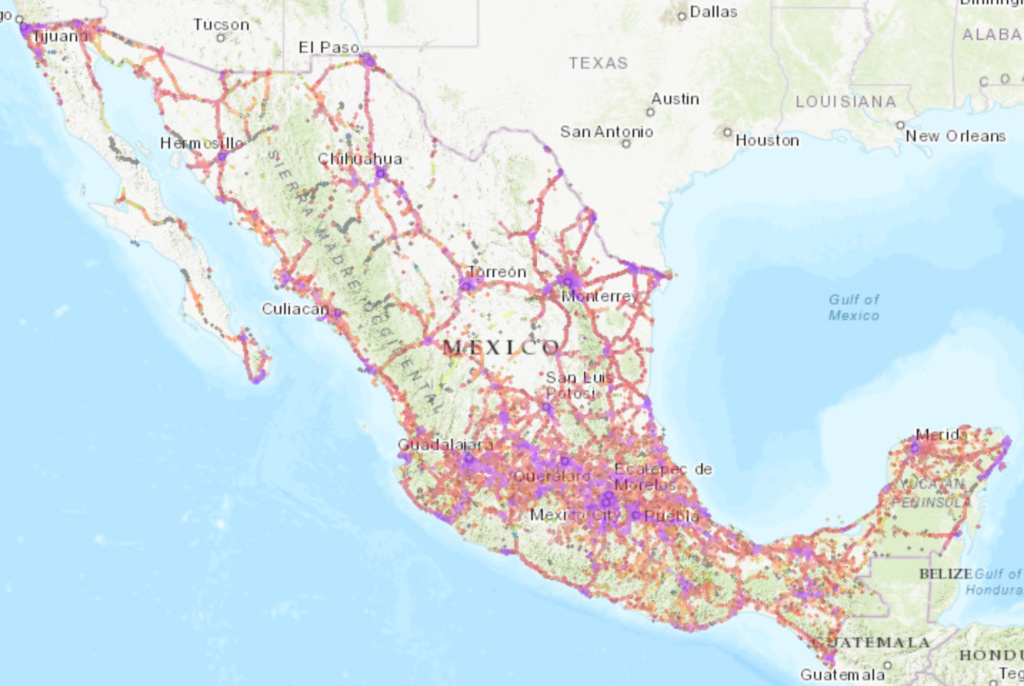
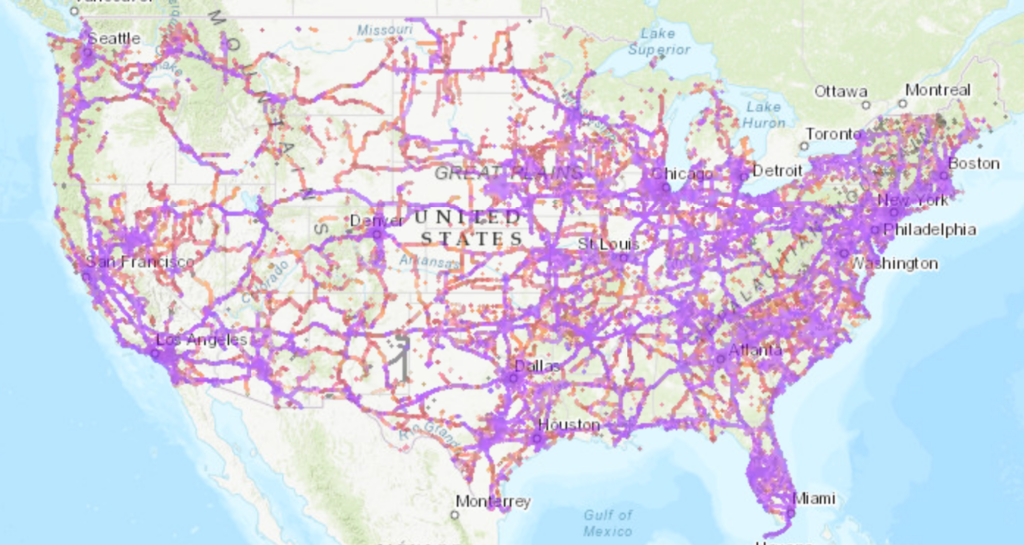
Maps provided by nPerf, an internet connectivity data company based in France.
Notice the increase in purple areas of the map? This purple indicates areas with 5G coverage. So, while the distribution of coverage is similar in the two countries, the areas with reduced 5G coverage means having reduced data speeds, more latency, and less data capacity for sending/receiving pictures, videos, GIFs, and other files.
The Opportunity: We discovered a hidden path around pricey data plans is to sneak in through WhatsApp, which is the dominant messaging tool in Mexico. What makes it sneaky (clever tech!) is that carriers are charging for data, but allowing free use of WhatsApp – they don’t count it as part of the data plan, even though it clearly relies on data. It also works on Wifi. Effectively, in Mexico many mobile plans historically zero-rated WhatsApp so it didn’t count against users’ data allowances. That made it feel essentially “free” and consistently accessible, even for people with limited prepaid balances. Add in the ability to connect internationally for no extra cost, capability of group chats, voice notes, location sharing, and end-to-end encryption, and it’s easy to understand why WhatsApp is so popular locally. Our technical solution became clear: we worked with our developer to create new versions of the Hive Mechanic cards that are compatible with WhatsApp.
Technical Aside: Notes on Bandwidth and Mobile Media for Curious Folks
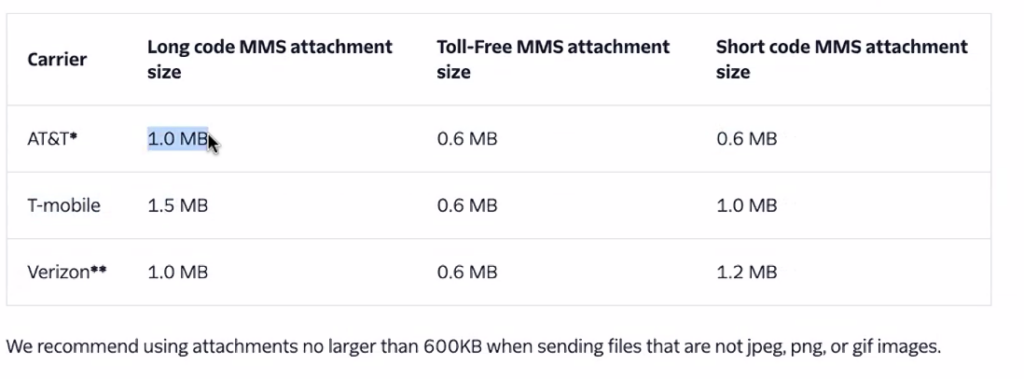
The Challenge: When sending media files, such as images, audio, and video, most traditional carriers impose strict limits on how large of a file they’ll send, often around 5MB for MMS (Multimedia Messaging Service), or just 1MB for SMS (Short Message Service). While this limit is generally fine for smaller file types like images and audio files, this is incredibly low for sending videos, which are typically at the very least 2mb for a minute of footage even for SD (standard definition) low bit-rate videos. As we cannot predict the carriers of our user-base and MMS automatically falls back to SMS if the carrier does not support it, we are forced to accommodate for the lower file size by default. This leaves Hive Mechanic users only able to either send video links requiring data-plans or to directly send very short, very low quality videos, which can be difficult to properly compress and users may not have the tools to do so.
Finally, while it’s worth noting that the modern standard has shifted to RCS (Rich Communication Services), which does have a higher limit at 16 MB, RCS requires either Wi-Fi connection or a data-plan. Additionally, both your sending and receiving phone lines must be RCS enabled, with the file falling back to MMS or SMS if the receiving phone does not have RCS capabilities. If the file is too big, this fallback would result in a failure to send the message without a clear indication to the user.
The Opportunity:
Activities using WhatsApp are able to take advantage of its higher standardized limit of 16MB for media files with a length limit of 90 seconds for videos, which all of its users have access to. This frees up Hive Mechanic users to create games making heavier use of direct video content with the assurance that if they can receive the content during their testing, their players will too. In regions like Mexico, where WhatsApp is zero-rated, this means you can reliably send video footage to your players without leaving the app through links and incurring data-usage elsewhere.
We have not yet solved voice calls over WhatsApp. This might eventually be possible, but for now we either switch to traditional phone calls, or sending audio clips back and forth asynchronously in WhatsApp.
Clever-Tech Approach #2: Embrace Colloquialism, Not Literal Translations
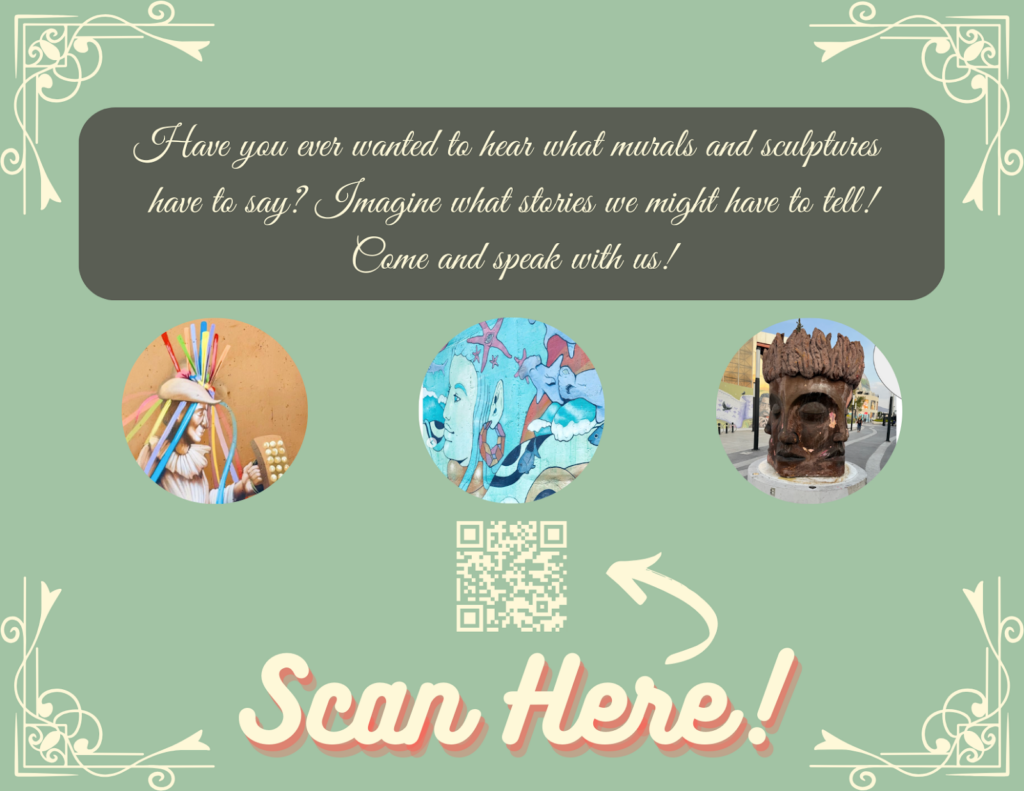
The Challenge: When working across languages, we argue for aiming beyond AI translation with good judgment. High quality localization also extends to tone, pacing, humor, poetic elements, and even gameplay instructions. Words rarely map cleanly from one language to another. The emotional texture of a line, the rhythm of a joke, or the clarity of a prompt often depends on cultural context as much as vocabulary. For that reason, fluency alone is not always enough.
The Opportunity: Embrace colloquialism. We had to go further than we first expected; yes, one of our designers (Hazel) is fluent in Spanish — but she recognized that as a Puerto Rican Spanish speaker, her phrasing might not achieve sufficient colloquialism for this specific town in Mexico. One solution is a local validation — not just for regional vocabulary, but also to identify opportunities to incorporate colloquialisms that would make the experience feel more natural.
This validation is just as important as the initial translation. It helps avoid subtle mismatches in tone and ensures that instructions feel intuitive rather than overly formal or foreign. Strong localization is ultimately about credibility. When players feel that the language reflects their everyday speech, the game feels designed for them rather than adapted as an afterthought.
Clever-Tech Approach #3: Have Locals Pick Cultural Assets (and put them in demos)
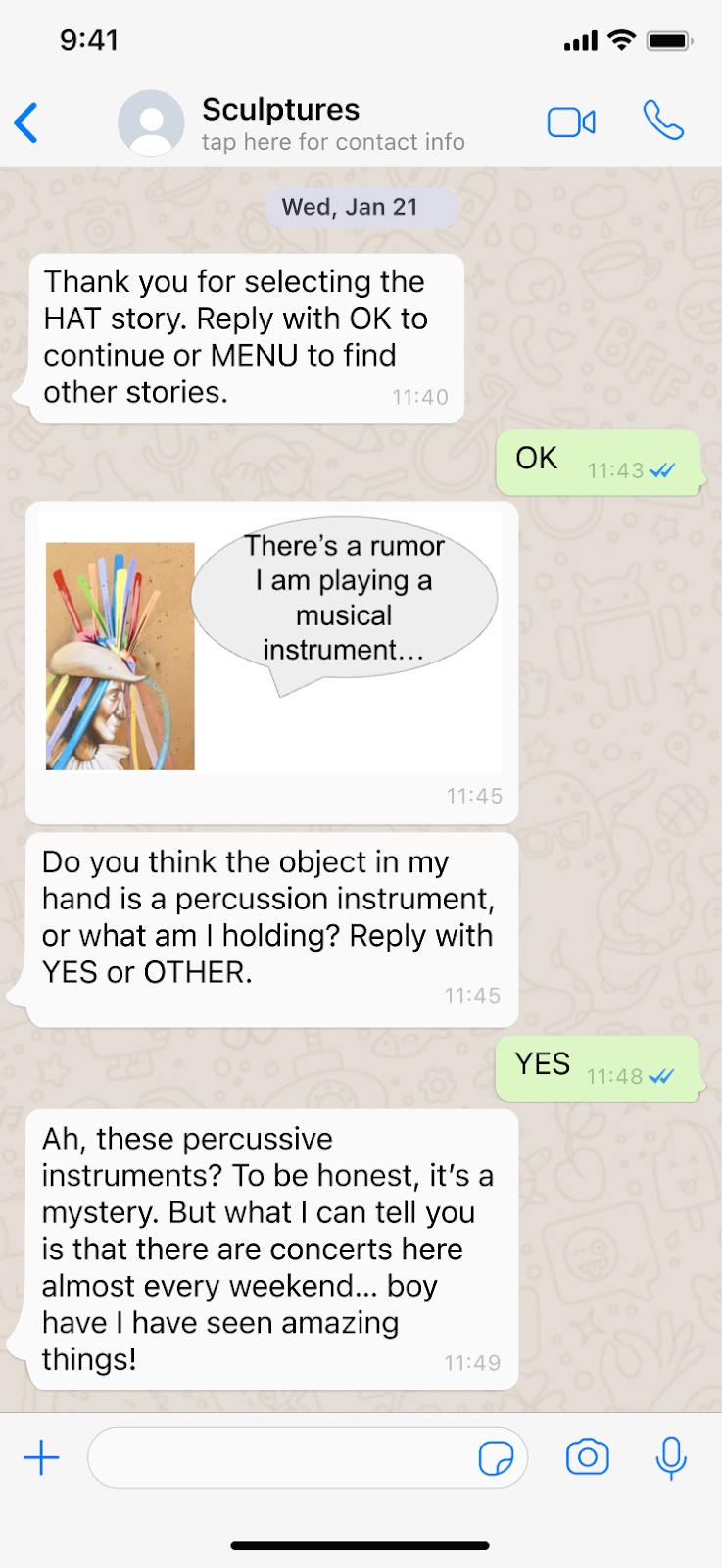
The Challenge: Authentically reflecting the culture and people of a place requires more than surface level research. It also requires a willingness to share power in the design process. Rather than beginning with a generic template, we started with local relationships and worked toward a functional, working local demo that could ground our decisions in lived context. That shift changed the kinds of questions we asked and the assumptions we were willing to challenge.
The Opportunity: Instead of relying solely on highly marketed landmarks or tourism assets, we spoke with local partners who could point us toward spaces and stories that mattered to residents. A human perspective helped us distinguish between what is promoted to visitors and what actually holds cultural weight for the community. We asked about everyday public spaces and paid attention to how familiar terms might carry different meanings. Even something as simple as a “library” can function differently across contexts, with distinct social norms, uses, and symbolic value. Designing with those nuances in mind allowed the experience to feel grounded and locally credible rather than imported and re-skinned.
Clever-Tech Approach #4: Refine Scripts with Locals
The Challenge: Traditional co-design models tend to have two sides: (1) HCI, computer science-driven frameworks that emphasize technical innovation and (2) participatory case studies built on long-standing trust relationships within a specific community. Neither of these approaches felt right for our purposes; we didn’t seek to have technical innovation nor did we have established relationships within the community. We needed a new third area to explore.
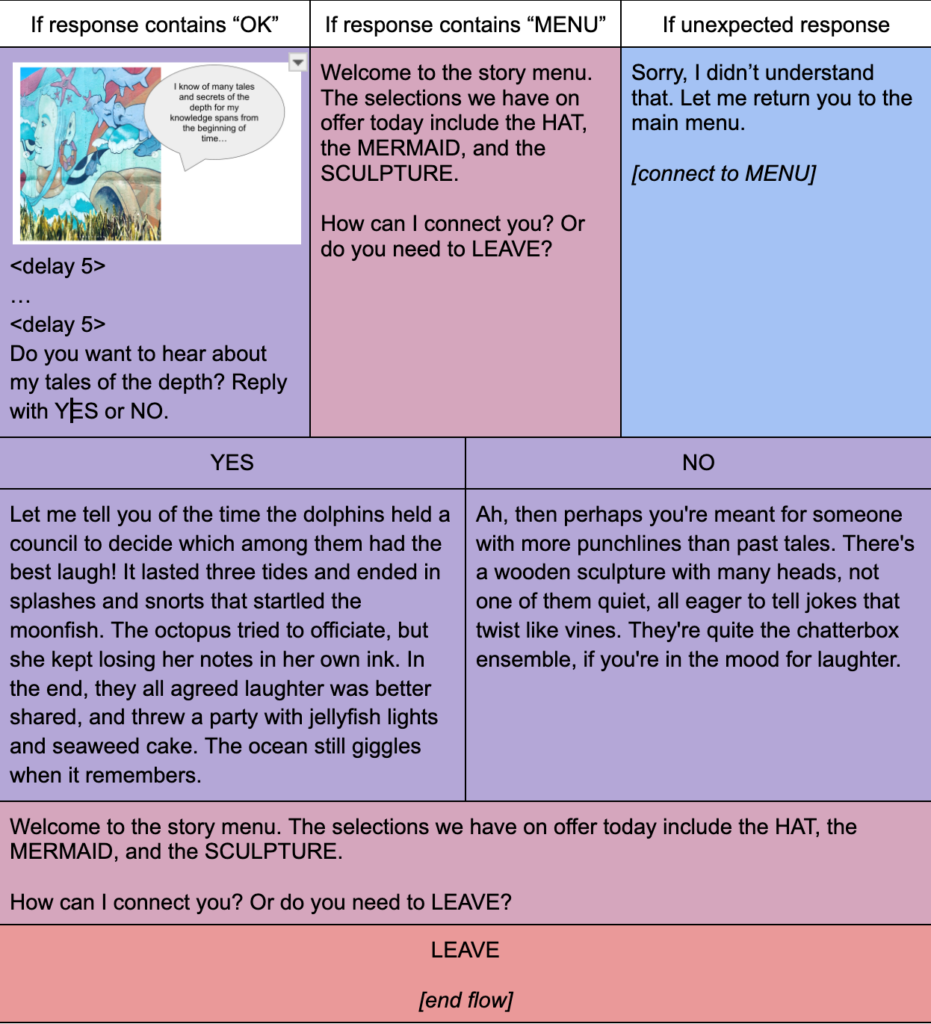
The Opportunity: Scaffolding with a demo that used local assets to help new partners step into the design process with something to react to, helped create a practical entry point for imagining what the experience could become. This scaffolding helped to accelerate trust with the second-layer connections we were introduced to within the community; it used our current understanding of the local context to emphasize the vital importance our new connections have in validating and expanding the original demos to create the real game. We also opted to use a combination of demonstration (having a functional short demo that local partners can try with WhatsApp on their own devices) and using color-coded tables (image) to simplify looking at the “back end” to edit content. The functional demo provides a taste of what playing the game feels like while the tables help to rapidly prototype and edit content without having to get into the details of how to operate Hive Mechanic.
This approach is not without limitations. It depends on relationships to function well, and it has not yet been widely adopted as a formalized model. There is also a fair critique that participatory processes cannot simply be systematized. At the same time, this new middle layer addresses a recurring challenge: when cultural contexts are too distant, ideas remain abstract and difficult to transfer. By grounding design work in local assets, language, and workflows, we can help situate imagination in place. In doing so, we are not just translating a product. We are scaling a place based imagination in a way that remains connected to lived experience.
Keep Going
Localization is a process. The steps above are a beginning with an emphasis on the tech as part of localization for neighborhood-level games. From here, the process continues – especially to share power, and adapt more deeply to local social, technical and cultural conditions.
[This is part of a series on internationalizing our approach to mobile story games and low-tech design.]