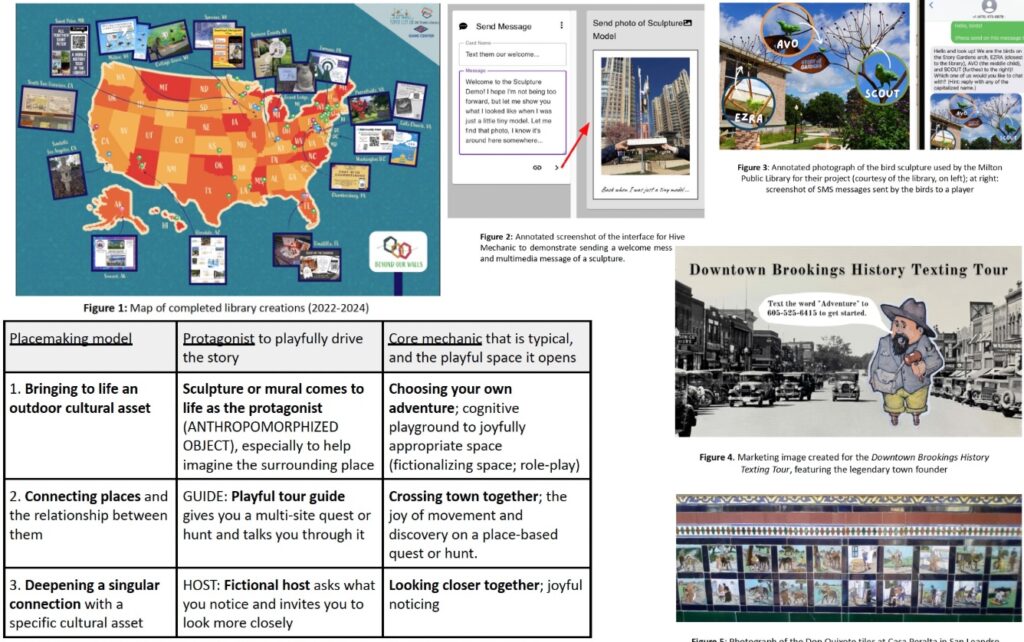
After three years of work across 50 towns and cities, we are thrilled to publish a new peer-reviewed article in the Proceedings of the Digital Games Research Association DiGRA 2026. The full title is: “Neighborhood Making of Story Games: Accessible Joy in Low-Tech Design” (full PDF) and it is co-authored by Benjamin Stokes, Eric Schoenborn, Hazel Arroyo and Meagan Couture.
This is one of the first studies to identify systematic ways to bring design to more neighborhoods, including:
(1) Call them “story games.” To match the narrative goals of most neighborhoods and to frame accessibility in terms of storytelling rather than technology
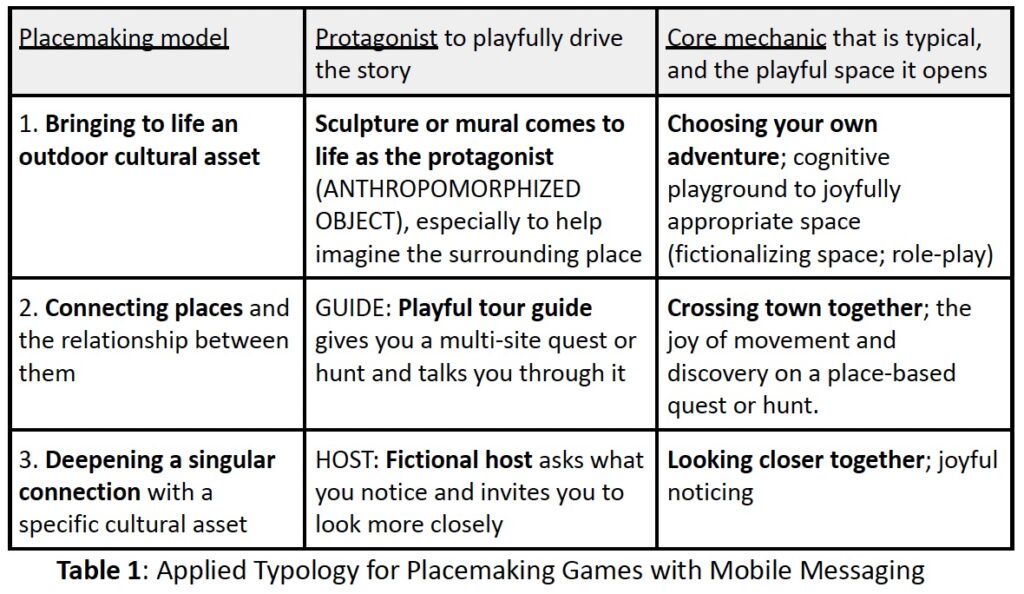
(2) Pick the right game template. We identify three models that consistently worked for neighborhoods, each with their own mechanics, approach to a narrative ‘protagonist’ and more. See table below.
(3) Reframe game design. Different ways to approach design are necessary to involve non-technical partners, and to give them creative control (rather than deferring to creative experts and artists)
(4) Seek “conversational playfulness”. Good games are not easy to make, and the process can feel overwhelming. We find that the joy in game design can be best retained by centering a playful spirit around the kind of creativity that ordinary people are already good at: narrative role play. This shift in orientation for the process makes game design accessible to a much wider set of neighborhood groups.
ABSTRACT: Neighborhood games to benefit the community are becoming more accessible and low-cost to build. Different approaches to design are necessary at the local level, including for authentic “locally made” games that connect residents to place, community, and local history. This paper is based on three years of co-design with more than 50 separate town and neighborhood partners. For accessibility, the technical approach included multimedia messaging and voice (MMS, SMS, branching voice trees). Each successful co-design partner sought to “engage beyond their walls” with cultural assets like murals and historic sculptures. For minimally-resourced partners, design models and patterns are especially needed. This study shows how game design often needs to be reframed for first-time designers, can be scaled through public libraries with minimal budgets, and can still retain the joy in making real games for local impact. The findings contribute to the study of democratizing game design for more neighborhoods and stronger places.
Findings, figures and cases
The data: Our insights come from three years of work, across more than 50 towns and cities. Each partner signed up to make a game or interactive story to “engage beyond your walls.” For more, read about our EBOW project.

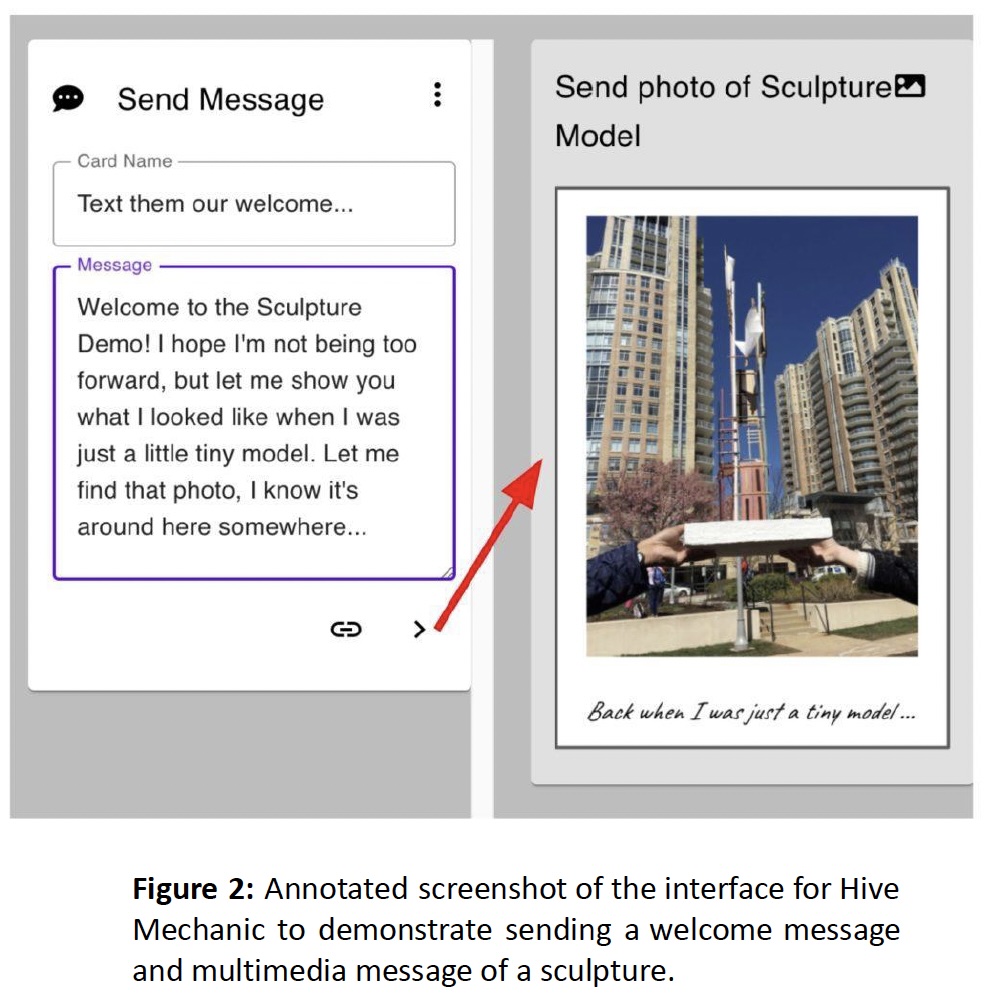
The “low-tech” approach involved the Hive Mechanic game engine, created by our lab and released as open source. Ordinary residents can edit and make their own games without knowledge of programming. The interface can look like this:
Finding #1: A typology of placemaking games for mobile messaging
It is easier to build a low-cost game if you have a model. But the mechanics and impact can also vary. The table below summarizes the three primary types we identified:
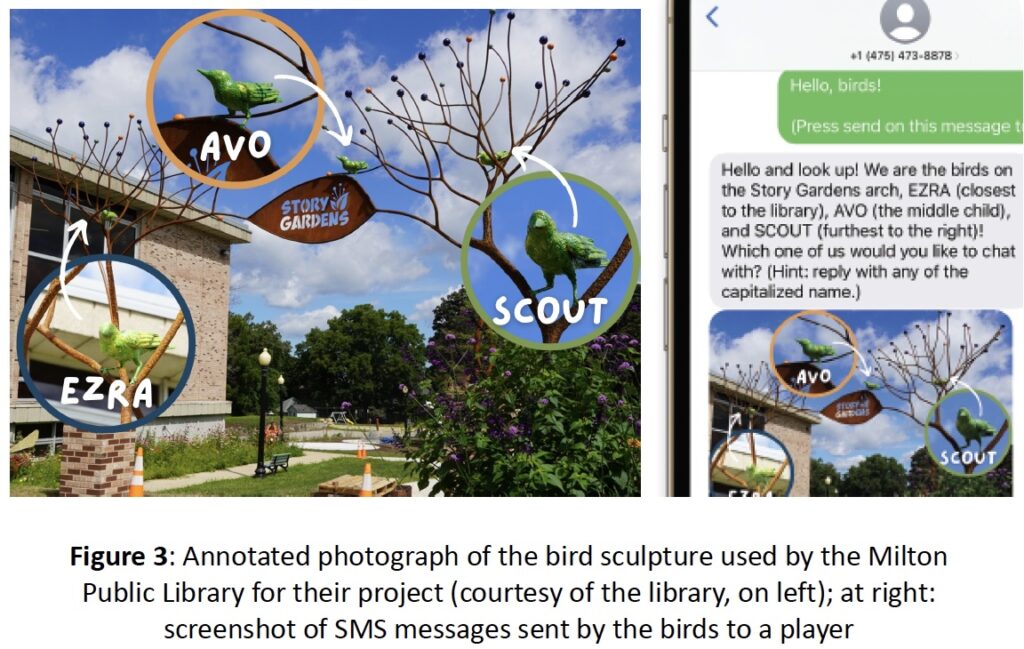
Case 1: A bird sculpture comes to life
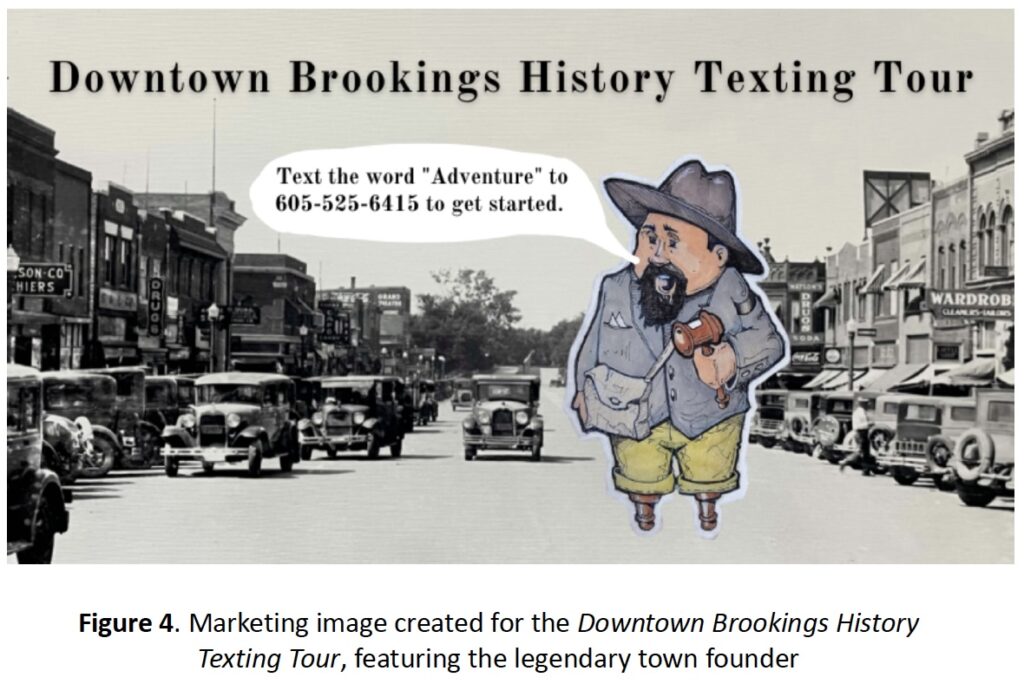
Case 2: Playful guide through downtown
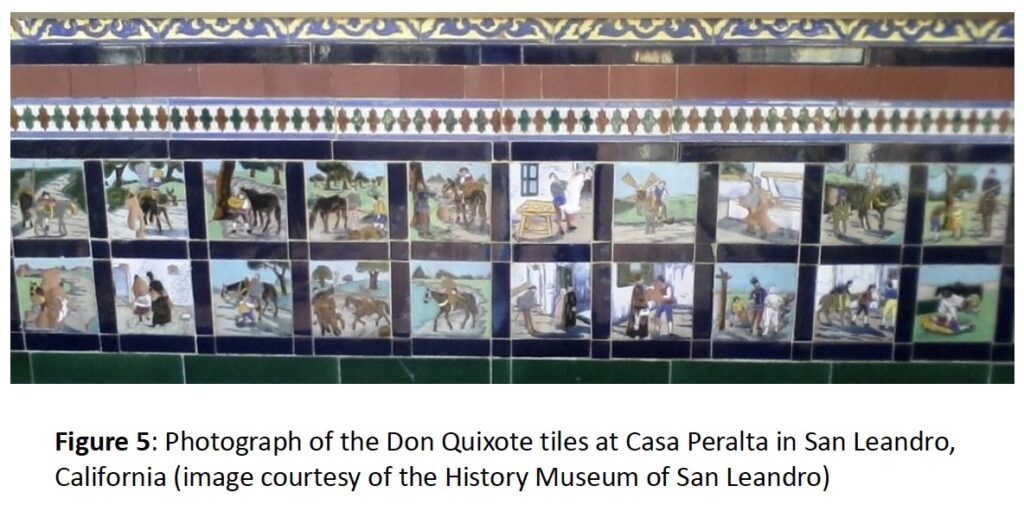
Case 3: Looking closely with Don Quixote
Design principles
We hope future work will apply the same design principles to cases worldwide. Our three design principles to anchor the project were: (1) Low-tech for resident accessibility. Participants can access the games with ordinary phones. (2) Do it ourselves. The projects were made by ordinary librarians, using a curriculum designed by game design faculty at a university. (3) Amplify community assets. All participating libraries sought to strengthen the connection to place-based sculptures, murals and cultural history. “
Download the full research article
You can download the PDF of this article.
Full citation (APA):
- Stokes, B., Schoenborn, E., Arroyo, H., & Couture, M. (2026, June). Neighborhood Making of Story Games: Accessible Joy in Low-Tech Design. Proceedings of DiGRA 2026. Digital Games Research Association, Maynooth, Ireland.
One comment on “Publication: “Neighborhood Making of Story Games” on EBOW findings”
Comments are closed.